

Views: 0 Author: Site Editor Publish Time: 2026-10-22 Origin: Site


Electrical failures drive countless vehicle owners crazy today. Surprisingly, a massive portion of these intermittent faults stems from a single, avoidable root cause. That cause is deploying the wrong termination component for a specific environment. Modern vehicles are essentially rolling computers, relying heavily on complex electrical architectures. Therefore, selecting reliable wire harness connectors is a make-or-break task for design engineers, shop mechanics, and procurement managers.
So, how do you choose between sealed and unsealed variations? It is not just a coin toss. The decision requires a strict balancing act. You must weigh environmental exposure against budget limitations and tight packaging spaces. In this comprehensive engineering guide, we will break down the structural differences and evaluate practical use cases. By the end, you will know exactly where each type belongs to ensure maximum system longevity.
Key Takeaways
Sealed components feature weather-resistant barriers like silicone or rubber. They are absolutely mandatory for harsh environmental zones such as engine bays, undercarriages, and exterior lighting.
Unsealed components lack environmental protection but win on cost and size. They are the go-to choice for protected, climate-controlled areas like vehicle cabins.
Choosing incorrect housings triggers three major field failures: galvanic corrosion, micro-fretting, and catastrophic short circuits.
The final procurement decision comes down to risk management. You must balance moisture, dust, and thermal stress against spatial limits and manufacturing budgets.
To make an informed engineering or purchasing decision, we first need to establish a clear baseline. Both variations serve the same fundamental purpose: transmitting electrical current or data securely. However, their structural designs dictate entirely different operational environments.
These specialized components are heavy-duty problem solvers. They are engineered specifically to withstand aggressive environmental conditions. The defining physical characteristic is the integration of elastomeric sealing mechanisms right into the assembly. This typically includes individual wire seals, a peripheral mating interface ring at the connection point, and cavity plugs to block any unused pin locations.
These elements work seamlessly together to form an impenetrable barrier. They block water, dust, automotive fluids, and road debris. High-quality sealed automotive connectors are often manufactured from durable thermoplastics like glass-filled PBT or PA66. These materials are chosen specifically to resist thermal degradation near exhaust manifolds or engine blocks. Furthermore, they are rigorously tested to meet strict Ingress Protection ratings. For example, an IP67 rating ensures survival during temporary submersion, while IP69K guarantees resistance to high-pressure, high-temperature washdowns.
In contrast, unsealed variations represent the standard, fundamental form of electrical termination in vehicle manufacturing. Physically, they consist of basic plastic bodies that hold metallic terminals firmly in place. Unlike their heavy-duty counterparts, they completely lack rubber gaskets, silicone wire seals, or mating interface rings.
Their primary function is to provide secure mechanical locking and reliable electrical continuity in environments that remain consistently clean and dry. Because they do not need to accommodate bulky weatherproofing mechanisms, these units feature a much smaller pitch. For instance, a 2.2mm pitch 32-pin wire end male housing is a perfect example of maximizing interior space without sacrificing electrical continuity. They rely entirely on the surrounding environment, such as the climate-controlled interior of a vehicle cabin, to protect the delicate metal contacts from moisture and airborne contaminants.
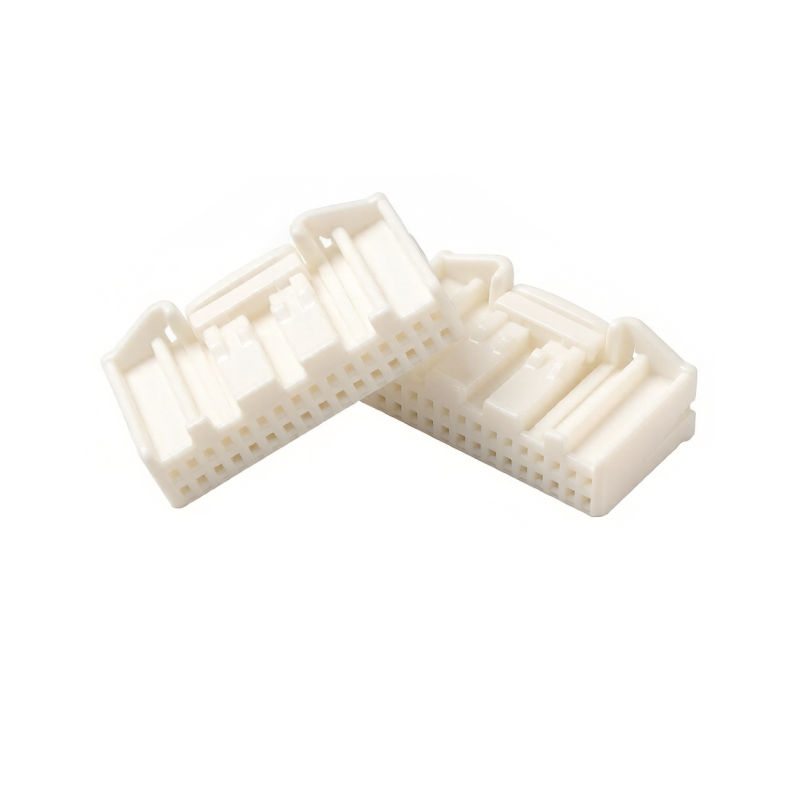
When mapping out a vehicle's electrical architecture, engineers must objectively weigh the operational benefits of sealed units against their inherent manufacturing costs. Let us look at the reality on the assembly line.
The primary advantage of a sealed system is ultimate protection against environmental ingress. Picture a wheel speed sensor constantly bombarded by freezing slush and road salt. In such areas, elastomeric seals prevent liquid from ever reaching the metal terminals. This directly stops galvanic corrosion and oxidation, which are the leading causes of mysterious voltage drops and dead circuits.
Additionally, sealed units offer superior vibration resistance. The internal rubber components act as natural dampeners. They absorb high-frequency engine vibrations, reducing the microscopic movement of the terminals within the housing. This dampening effect minimizes the risk of terminal wear and ensures a highly stable electrical connection over the vehicle's entire lifespan.
Despite their robust performance, these heavy-duty components come with notable drawbacks. The most immediate factor is a higher cost per unit. Adding silicone seals, cavity plugs, and complex overmolding processes inevitably increases the overall Bill of Materials for the wiring assembly.
Furthermore, they occupy a much larger physical footprint. To house the sealing components effectively, the exterior plastics must be bulkier. This makes them nearly impossible to use in tightly packaged dashboard areas. Finally, assembly and maintenance take more time. Extracting a terminal for repair requires specialized depinning tools to avoid tearing the internal rubber seals, which can slow down diagnostic times on the shop floor.
For applications where environmental threats are naturally mitigated by the vehicle's physical structure, unsealed options shine. They offer massive advantages, particularly in mass production environments where efficiency and space-saving are paramount.
Cost-effectiveness is the absolute hallmark of unsealed automotive connectors. Without the need for supplementary rubber components, they are significantly cheaper to manufacture. When a modern vehicle requires hundreds of interior connections for infotainment and comfort features, the cumulative cost savings become substantial.
Their compact design is another major engineering benefit. Because they do not require extra internal volume for wire seals, these housings allow for ultra-high-density pin counts in highly restricted spaces. You will find them packed tightly behind the dashboard or within steering column assemblies. In addition, they are generally easier and faster to assemble on the production line and simpler to disassemble for routine maintenance.
The primary limitation is their zero protection against water or dust ingress. If accidentally exposed to liquids, dirt, or conductive debris, the system is immediately compromised. This often results in catastrophic short circuits.
Moreover, they are highly susceptible to corrosion if placed in environments with high ambient humidity or sudden temperature fluctuations. Even in supposedly dry areas, severe condensation can accumulate on the unprotected metal terminals. Over time, this leads to gradual oxidation, increased electrical resistance, and degraded signal integrity.
To facilitate a clear, data-driven decision-making process, the following comparison highlights the primary operational metrics of both categories.
Feature / Metric | Sealed Automotive Connectors | Unsealed Automotive Connectors |
|---|---|---|
Ingress Protection | High, typically IP67 to IP69K | None, typically IP00 to IP20 |
Physical Size | Bulky, requires space for internal seals | Compact, optimized for high-density pin counts |
Cost per Unit | Higher due to complex manufacturing and materials | Lower, highly cost-effective Bill of Materials |
Vibration Resistance | Excellent, rubber seals dampen movement | Moderate, relies solely on plastic locking clips |
Primary Environment | Engine bay, chassis, exterior lighting | Cabin interior, sealed control boxes |
The price delta between sealed and unsealed systems is significant when multiplied across an entire vehicle production run. Procurement managers must evaluate when the Return on Investment justifies the higher upfront cost. The return on weather-resistant units is realized through the prevention of costly warranty claims. If a connection failure could lead to engine stalling or compromised safety systems, spending extra on proper sealing is unequivocally justified.
Packaging constraints dictate much of modern automotive design. Unsealed variations win decisively in tight interior spaces. Modern infotainment systems and climate control units require dozens of data and power lines routed into a very small dashboard cavity. The inherent bulkiness of sealed housings makes them physically impossible to use in these high-density interior applications.
Installation procedures differ significantly on the assembly line. Crimping terminals for sealed applications often requires specialized tooling to crimp both the wire conductor and the individual wire seal simultaneously. Conversely, unsealed units utilize standard crimping processes, which are faster and more easily automated. During maintenance, unsealed components are easier to repair, whereas their sealed counterparts require careful handling to ensure the watertight integrity is perfectly maintained after reassembly.
The core principle of selecting the correct component involves dividing the vehicle into distinct environmental zones. By mapping out these zones, engineers can apply the right technology exactly where it is needed.
Engine Compartment: This is arguably the most hostile zone in a vehicle. Components here face extreme heat cycles, exposure to motor oil, corrosive coolants, and potential high-pressure washing. Robust sealing is absolutely mandatory for fuel injectors, ignition coils, and engine sensors.
Chassis and Undercarriage: Wiring routed along the frame, such as wheel speed sensors and transmission wiring, is constantly bombarded by road splash, salt, mud, and gravel. Without extreme weatherproofing, immediate failure is inevitable.
Exterior Lighting and Doors: Headlights, taillights, and side mirror wiring harnesses are subjected to rain, snow, and aggressive car washes. Water penetration in these areas is highly likely, making sealed housings a strict requirement.
Interior Cabin: The climate-controlled cabin is the optimal zone for these cost-effective connections. Under-dash wiring, infotainment displays, instrument clusters, and interior lighting face minimal moisture and operate in highly stable temperatures.
Trunk Space: Assuming the trunk weatherstripping is intact and there are no leak risks, the rear wiring harnesses managing interior trunk components can safely utilize unsealed configurations.
Sensors Inside Sealed Modules: Many modern Electronic Control Units are housed in heavily sealed aluminum or plastic enclosures. The internal connections linking the circuit board to internal sensor arrays are already protected by the outer shell. This allows engineers to safely use unsealed, high-density plugs inside the module.
The automotive sector is rapidly accelerating its transition toward electric vehicles and advanced driver-assistance systems. Consequently, the operational demands placed on electrical architectures are shifting dramatically. Recent market analyses indicate a soaring demand for high-voltage, high-density connectivity solutions.
Because electric powertrains operate at significantly higher voltages, the risk of catastrophic arcing due to moisture ingress is severe. This makes robust sealing technologies more critical than ever for high-voltage battery management systems. In contrast, the rapid proliferation of interior sensors processes massive amounts of data within climate-controlled cabins. This data explosion is driving innovation in ultra-compact, unsealed 32-pin and 64-pin designs. Engineers are no longer just choosing a generic plug. They are strategically mapping out environmental zones to balance extreme safety requirements with the pressing need for lightweight, space-saving wiring harnesses.
Understanding how and why these components fail in the field helps engineers select the appropriate materials. Utilizing the wrong type inevitably leads to system degradation, triggering intermittent electrical faults and potential safety hazards.
Corrosion is the most pervasive threat caused by using unsealed components in moisture-rich environments. Picture a vehicle navigating a coastal highway. The ambient salt spray can easily infiltrate a poorly protected terminal. When water containing impurities contacts the metal, it creates an electrolytic reaction. This leads to the buildup of non-conductive oxides on the terminal surfaces, causing severe voltage drops and dead circuits. Avoiding this requires strict adherence to using sealed connector housings anywhere outside the vehicle cabin.
Automotive environments are highly dynamic, subjecting electrical components to continuous mechanical vibration. Micro-fretting occurs when constant vibration causes microscopic movements between the mated male and female terminals. In cheap or unsealed housings with poor terminal locking mechanisms, this friction wears away the protective tin or gold plating. This exposes the base metal to rapid oxidation. Sealed units often mitigate this issue because the elastomeric seals act as shock absorbers, restricting terminal movement and preventing fretting wear.
The physical integrity of the exterior plastic is just as critical as the metal inside. Using interior-grade plastics in high-temperature zones like the engine bay leads to severe thermal stress. Continuous exposure to extreme heat cycles causes inappropriate plastics to become brittle, warp, or even melt. This degradation destroys the mechanical locking mechanisms, allowing terminals to back out. To avoid this, engineers must specify high-temperature thermoplastics, such as PA66, and appropriate silicone seals for engine compartment applications.
For engineers and procurement teams, purchasing decisions cannot be based solely on visual inspections. Compliance with established industry standards is a non-negotiable metric for assessing long-term product reliability.
The Ingress Protection rating system provides a standardized measurement of a component's resistance to environmental factors. For exterior applications, the first digit indicates total protection against dust. The second digit indicates water resistance. An IP67 rating ensures the unit can survive temporary submersion in water. An IP68 rating guarantees protection against continuous submersion, while an IP69K rating certifies resistance against high-pressure, high-temperature water jets. This is absolutely crucial for commercial and off-highway vehicles.
Reputable manufacturers design their products to meet stringent automotive standards. In North America, the USCAR-2 standard dictates the baseline testing for mechanical and electrical reliability, defining acceptable limits for terminal retention and mating force. Similarly, ISO 8092 outlines international standards for connections in onboard electrical wiring harnesses. Procurement teams should always verify that their selected components comply with these specific specifications.
Validating performance requires aggressive laboratory testing before products reach the assembly line. Manufacturers perform salt spray testing, such as ASTM B117, to simulate years of exposure to corrosive winter road salts. Thermal shock testing rapidly cycles the components between freezing temperatures and extreme heat to ensure the plastic and rubber seals do not crack under rapid expansion. Pull-force testing is also conducted to verify that the terminals remain securely locked within the housing under severe mechanical stress.
Transitioning from theoretical knowledge to practical application requires a systematic approach to component selection. Balancing performance requirements against budget constraints is the ultimate goal. Here is how you do it on the engineering floor.
The most effective way to choose the correct housing is to run through a strict environmental checklist. Will the connection point be exposed to rain, road splash, or high humidity? Will it be subjected to engine heat or transmission fluids? Will it experience heavy, continuous vibration? If the answer to any of these is yes, a weather-resistant unit is absolutely required. If the environment is completely dry and climate-controlled, an unsealed configuration is the logical, cost-saving choice.
Beyond environmental factors, the electrical load dictates the housing requirements. Ensure the chosen design supports the necessary wire gauge, such as standard AWG sizes, and the maximum continuous current load. High-amperage applications generate internal heat. This requires housings made from high-temperature plastics that will not melt or deform under maximum load conditions. Always consult the manufacturer's current derating curves during the design phase.
Finally, the integrity of your vehicle's electrical system depends entirely on the quality of the components you source. The market is unfortunately flooded with low-cost, counterfeit parts that utilize recycled plastics and impure metal alloys. It is critical to partner with reputable suppliers who utilize OEM-grade materials and adhere to strict quality control processes. Working with verified manufacturers ensures long-term reliability, robust engineering support, and compliance with all safety standards.
Choosing between sealed and unsealed components requires careful, methodical thought. Your decision directly impacts vehicle safety, system longevity, and manufacturing efficiency. Always evaluate the specific environmental risks first before looking at the price tag. As a general rule of thumb: if the connection sits outside the cabin, seal it to prevent catastrophic failure. For protected interior spaces, unsealed options will save you both money and valuable packaging space.
If you are engineering a new harness or upgrading an existing architecture, do not leave your connectivity to chance. Explore high-quality, rigorously tested solutions tailored to your exact specifications at Jinkeji, and ensure your next project is built to last.
No. Electrical tape is not a viable substitute for a properly engineered mechanical seal. The extreme heat of an engine bay will quickly degrade the adhesive backing of standard electrical tape, causing it to unravel. Furthermore, tape cannot prevent the capillary action of fluids traveling down the wire strands into the terminal cavity. Always use purpose-built, weather-resistant units for any engine compartment application to ensure safety and reliability.
Yes, the vast majority of high-quality units are designed to be serviceable. Using specialized extraction tools, technicians can safely depin the metal terminals from the plastic housing without causing damage. However, it is important to carefully inspect the silicone wire seals and the main interface gasket during disassembly. If these rubber components have become brittle, torn, or permanently compressed due to age and heat cycling, they must be replaced to maintain the integrity of the Ingress Protection rating.
While dielectric grease is excellent for preventing oxidation and fretting corrosion on metal terminals, it does not turn an unsealed housing into a waterproof one. Heavy water exposure or pressurized washing will eventually wash the grease away or push moisture past the grease barrier, leading to shorts. Dielectric grease should be used as a supplementary protective measure, not a replacement for a true elastomeric seal in wet environments.
Temperature ratings depend entirely on the specific thermoplastic used in the housing. Standard unsealed components made from basic ABS or nylon typically top out around 85 to 105 degrees Celsius. However, specialized high-temperature unsealed housings made from materials like glass-filled PA66 or PBT can withstand operating temperatures up to 125 or even 150 degrees Celsius. Always verify the manufacturer's spec sheet to ensure the housing material matches your ambient temperature requirements.
Recognizing the early warning signs of failure can prevent catastrophic system breakdowns. The most common symptom is intermittent electrical behavior, such as a sensor that only works on dry days, or headlights that flicker when driving over rough roads. Visual inspections may reveal green or white powdery corrosion on the metal terminals, indicating moisture ingress. Additionally, look for any signs of thermal damage, such as distorted, melted, or discolored plastic housings, which suggest excessive electrical resistance or dangerous proximity to extreme heat sources.


